Sleep Disorders
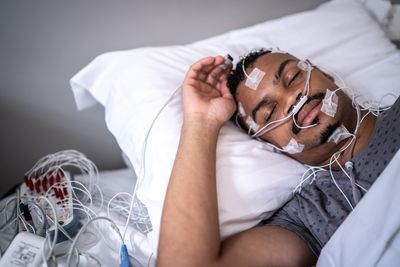
Sleep Disorder Prevalence in the United States
According to the CDC, an estimated 50–70 million U.S. adults have a sleep disorder, including sleep apnea, insomnia, restless legs syndrome (PLMD/RLS), narcolepsy, and others.
Obstructive Sleep Apnea (OSA)
OSA is one of the most common clinically significant sleep disorders.
- Across population studies, OSA prevalence ranges widely, with estimates that up to 9–38% of adults meet criteria for OSA (AHI ≥5 events/hour), varying by age, sex, and diagnostic method.
- Prevalence increases with age and obesity; in older adults, moderate or severe OSA can be as high as ~49% or more in some studies.
- Other estimates suggest roughly 25 million to 30 million Americans may have OSA, with many cases undiagnosed.
Key points about OSA:
- Very common but underdiagnose
- Risk increases with obesity, age, male sex
- Affects cardiovascular and metabolic health
Insomnia
Insomnia or insomnia symptoms are among the most frequently reported sleep problems.
- About 33% of U.S. adults report symptoms of insomnia (difficulty falling or staying asleep), though not all meet the diagnostic criteria for insomnia disorder.
- 6–10% of adults meet formal criteria for chronic insomnia disorder (symptoms ≥3 months with daytime consequences).
- National survey data (2020) also show 14.5% of adults had trouble falling asleep most days or every day, and about 17.8% had trouble staying asleep most days or every day.
Insomnia prevalence often differs by age, sex, and socio-demographic factors, and symptoms can overlap with other sleep conditions.
Periodic Limb Movement Disorder (PLMD)
Data on formal PLMD prevalence are more limited, but the condition and related movements are fairly common, especially in older adults.
- Research suggests that periodic limb movements during sleep (PLMS) affect approximately ~7.6% of adults when defined by an elevated PLMS index.
- Claims-based research shows periodic limb movement disorder diagnoses have increased over time, rising about 30% over a recent multi-year period (2013–2016), indicating growing recognition or identification.
- Periodic limb movements in sleep are often associated with restless legs syndrome and other sleep conditions, though the true “disorder” (with impact on sleep quality) is less common than mere limb movements.
Circadian Rhythm Sleep-Wake Disorders
Circadian rhythm disorders are less commonly diagnosed but still significant.
- Survey research estimates that approximately 3% of adults have a clinical circadian rhythm sleep-wake disorder. However, many more — perhaps up to 10% of adults and 16% of teens — may have unrecognized circadian rhythm misalignment affecting sleep.
- Shift Work Sleep Disorder (a form of CRSD) is estimated to affect 2–10% of the general population, and about 27% of shift workers, though precise estimates vary.
Other Sleep Problem Indicators
Although not diagnostic for a specific disorder, broad sleep trouble is common:
- Nearly 1 in 2 adults in some population surveys report trouble falling or staying asleep at least sometimes.
- Many people report symptoms like snoring (41%) and episodes of stopped breathing (13.6%) in large population samples.
Summary
- Sleep disorders are often underdiagnosed, so true prevalence may be higher than reported.
- Obstructive sleep apnea and insomnia in particular have broad public health impact due to effects on cardiovascular, metabolic, and cognitive health.
- Local Houston data are largely drawn from clinic observations rather than standardized epidemiologic surveys, so percentages mirror national trends but local studies vary by practice.